
Maritime in the High Desert
By C-4 Impact
Eastern Washington is often described in simple terms. People picture dry ground, wide horizons, irrigation pivots turning in slow circles, and long stretches of highway cutting through open land. That image has some truth to it, but it leaves out a defining part of how the region actually operates. Eastern Washington is shaped just as much by water as it is by land, and the maritime industry plays a far larger role here than most people realize.
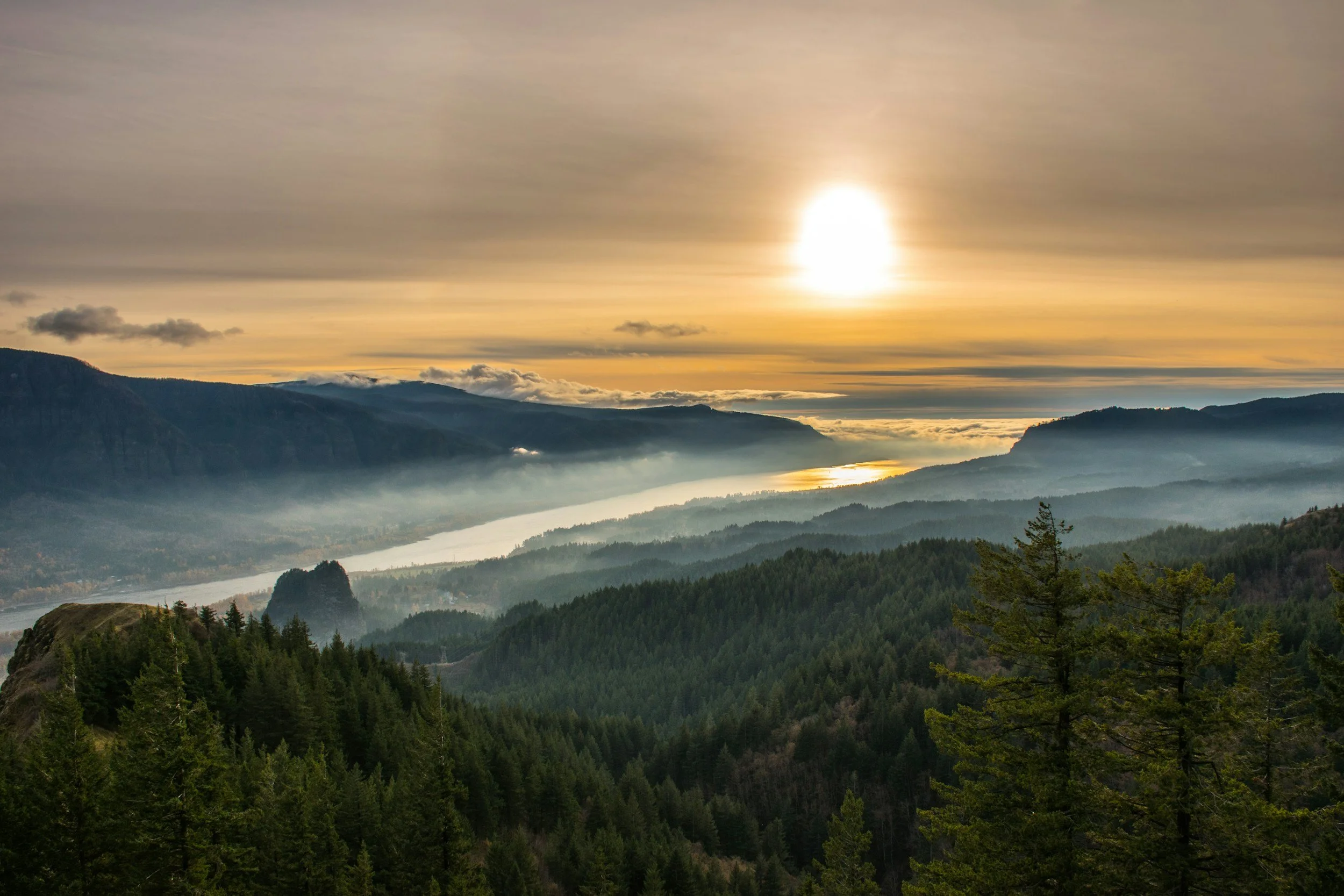
Columbia River. Photo by SquareSpace
The reason is the Columbia River. Although the Pacific Ocean sits far to the west, the Columbia and its connected waterways form an inland maritime system that quietly drives the region’s economy. It is easy to overlook because it does not look like a traditional seaport. There are no container ships towering over city skylines, no cargo terminals with cranes. Instead, the river moves steadily through farmland, dams, ports, and industrial sites, supporting energy production, agriculture, manufacturing, trade, recreation, and environmental management. In many ways, the Columbia River is the backbone of Eastern Washington.
Agriculture is often the first-place people recognize the river’s impact. Much of Eastern Washington would be inhospitable to large scale farming without irrigation. Apples, cherries, hops, potatoes, wheat, and other crops that define the state’s agricultural output depend on water drawn from the Columbia River system. Irrigation networks spread across tens of thousands of acres, turning arid soil into productive farmland. Entire communities rely on this waterway network, from family farms to large processors and exporters. When people talk about Eastern Washington agriculture, they are also talking about maritime infrastructure, even if they do not use that term.
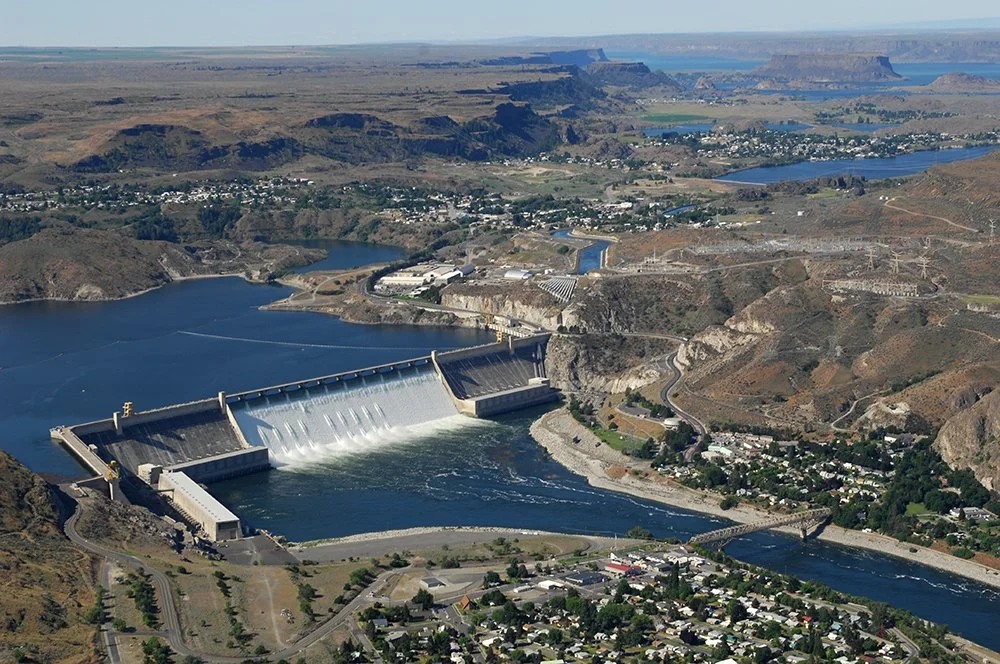
Grand Coulee Dam. Photo by: Columbia River System Operations.
Energy is another area where the river’s influence is impossible to miss. Grand Coulee Dam stands as one of the most significant pieces of infrastructure in the United States. It is the largest hydroelectric dam in the country and one of the largest in the world. The power generated there flows into homes, factories, data centers, and public utilities across the Pacific Northwest. That electricity supports industries far beyond the riverbanks. Behind the scenes, a skilled workforce keeps this system running. Engineers, electricians, turbine mechanics, dam operators, safety professionals, and environmental specialists all contribute to the steady production of clean, renewable energy. These jobs are deeply connected to the maritime sector, even though they are rarely labeled that way in public conversations.
The Columbia River also functions as a commercial transportation corridor. Inland ports like the Port of Pasco serve as gateways between Eastern Washington and global markets. Agricultural products, manufactured goods, and raw materials move through these ports and travel downriver by barge to larger ports before heading overseas. This system allows local producers to compete internationally while keeping transportation costs manageable. It also reduces strain on highways and rail systems. The river quietly carries the region’s economic output to the world, reinforcing Eastern Washington’s role in global trade.
Manufacturing adds another dimension to the inland maritime economy. Across the region, companies produce vessels, components, and specialized equipment that serve maritime users everywhere. In Colville, Hewes Craft Boats builds aluminum boats that are widely respected for their durability and performance. Recreational anglers, professional guides, and commercial operators use these vessels. The company’s success challenges the assumption that maritime manufacturing must be located near an ocean. What matters more is skilled labor, technical expertise, and reliable supply chains, all of which exist in Eastern Washington.
Spokane is another example of how inland maritime manufacturing thrives. E Z Loader manufactures boat trailers that are used around the world. Their products support a wide range of vessels, from small recreational boats to larger commercial crafts. Seaview Global, also based in Spokane, produces advanced mounting systems for marine electronics. These mounts appear on vessels used for fishing, research, recreation, and commercial operations across the globe. Together, these companies support a network of suppliers, engineers, technicians, and service providers that form a quiet but growing maritime manufacturing ecosystem.
Because of these industries, Eastern Washington offers a surprisingly broad range of maritime related careers. Boat builders rely on welders, fabricators, and assembly technicians who shape hulls, install propulsion systems, and integrate mechanical and electrical components. Marine electricians work on navigation systems, communication equipment, lighting, radar, and sonar. Hydropower facilities employ technicians and operators who maintain turbines, generators, and control systems that must operate continuously and safely.
Port operations create another set of career paths. Crane operators, logistics coordinators, heavy equipment specialists, freight handlers, and compliance professionals work together to move goods efficiently along the river. Marine mechanics service engines, hydraulic systems, jet propulsion units, pumps, and electrical components for both recreational and commercial vessels. Quality inspectors and technicians ensure that vessels and equipment meet safety and performance standards before they ever reach the water. Many of these jobs offer stable employment and strong career growth, yet they often remain invisible to students and job seekers who associate maritime work exclusively with coastal shipyards.
Environmental stewardship is also a central part of the inland maritime economy. The Columbia River supports complex ecosystems and critical fish populations that require constant attention. Water quality technicians, environmental scientists, habitat restoration crews, and fish and wildlife specialists monitor river conditions and work to balance economic activity with long term sustainability. These roles are essential to protecting the river as a shared resource. For individuals interested in conservation and applied environmental science, maritime careers offer a way to work directly at the intersection of industry and ecology.
Despite the size and importance of this inland maritime system, awareness remains limited. Many students, parents, and educators simply do not realize that maritime careers exist in Eastern Washington. Young people with interests in engineering, mechanics, logistics, manufacturing, or environmental science may never see a clear connection between those interests and the opportunities available in their own region. As a result, employers struggle to find skilled workers, while students look elsewhere for careers that may already exist close to home.
Closing this gap requires intentional collaboration between education and industry. Schools need access to current industry knowledge so that instruction reflects real world expectations. Students benefit from hands-on exposure that shows how classroom learning translates into actual jobs. Employers need ways to engage early with their future workforce, helping shape curriculum and build awareness of career pathways before students make long term decisions.
Organizations like C-4 Impact help make these connections possible. Rather than operating as a traditional training provider, C-4 Impact focuses on building relationships and structural pathways between educators and industry leaders. They help schools connect with employers, gain insight into workforce needs, and access equipment and expertise that reflect current industry standards. At the same time, they provide maritime employers with meaningful ways to engage with students, influence curriculum, and build a future workforce that is better prepared for real jobs.
These efforts are changing how young people view the region. More students are beginning to understand that maritime careers do not require moving to the coast. Opportunities exist right where they live, along the Columbia River and within Eastern Washington’s energy, manufacturing, and logistics sectors. By connecting education with real world applications, the region is building a workforce that understands its own maritime identity.
As Eastern Washington continues to grow and adapt, this identity will only become more important. Investments in hydropower modernization, advanced manufacturing, and global logistics are increasing demand for skilled labor. The maritime industry supports clean energy goals, strengthens local economies, encourages innovation, and contributes to long term regional stability. These benefits ripple outward, affecting communities far beyond the riverbanks.
Eastern Washington is more than a high desert. It is a region shaped by water, engineering, commerce, and the people who keep complex systems running day after day. The Columbia River is not just a feature on a map. It is a working river, and the maritime economy it supports is one of the most important, and least understood, forces shaping the region’s future.