
Washington State as a Maritime Campus: From Vision to Action (Part II)
By: Ann Avary
In Part I, we explored the idea of establishing Washington as a single, interconnected maritime campus—linking people, programs, and opportunity statewide. Part II moves from concept to practice: how it works, what it looks like, and why workforce development is economic development.
Is Washington a fully connected maritime campus? Not yet. But the work has already begun. In this article, I’ll highlight how the model functions, and share two project examples - one scaling statewide, and one emerging—that demonstrate multiple approaches to the same central goal.
From Concept to Practice
Meeting Students Where They Are
A statewide maritime campus isn’t about creating new programs—it’s about connecting and growing what already exists. Across Washington, strong programs already prepare the next generation of maritime professionals. The challenge—and the opportunity—is to align them into a cohesive system that provides seamless entry and progression for learners.
To work as a system, statewide maritime education must:
Map and connect pathways across secondary, postsecondary, and apprenticeship systems
Embed access so rural and underserved communities can participate fully
Integrate emerging technologies into curriculum and training
Create shared tools—from digital learning hubs to open-resource modules—so innovation scales sustainably
Prioritize K–12 and postsecondary faculty professional development, building faculty cohorts that can deliver current, competitive curriculum
The next step is statewide coordination through a hub-and-spoke model that links students, educators, employers, and communities into one unified learning ecosystem.
The Demographic Cliff
Washington, like the rest of the country, is facing a demographic cliff—a decline in the traditional college-age population and shifting patterns in who enrolls, when, and how. If we ignore this reality, critical programs will struggle to fill seats even as industry demand grows.
Addressing the demographic cliff requires strategies that:
Expand online and hybrid learning to increase flexibility and reach.
Meet students where they are, recognizing that many cannot relocate or commute long distances for high-demand programs.
Grow non-credit, standards-based training, creating on-ramps for working adults, career changers, and those re-entering the workforce.
Intentionally expand outreach to communities not traditionally served, including rural communities, first-generation students, Veterans, women, communities of color, youth and adults impacted by foster care, and people who are currently or formerly incarcerated.
Think entrepreneurially about education—treating education as a mission-driven business that must adapt to changing populations and markets.
A statewide maritime campus that integrates these strategies can both stabilize enrollments and expand opportunity.
The Hub-and-Spoke Model
The hub-and-spoke model turns vision into logistics. It is how we operationalize access and scale opportunity.
In this model:
Hubs anchor regional expertise, equipment, professional development, and high-capacity instruction at centers of excellence.
Spokes extend opportunity outward—bringing training directly to students through dual-credit programs, mobile training units, satellite instruction, and regional partnerships with community and technical colleges, high schools, skill centers, maritime education providers, apprenticeship programs, and community-based organizations.
A connective digital layer—standards-based, open-resource curricula and platforms like teachwelding.org—ensures high-quality learning materials are available statewide.
This structure transforms what might otherwise be isolated local efforts into a coordinated campus network reaching every corner of Washington. Whether a student lives in Colville, Grays Harbor, the Tri-Cities, or Port Angeles, they can access maritime learning close to home—while still connected to a shared statewide system.
Frameworks
The Curriculum Bridges
Frameworks are the curriculum “bridges” that make the hub-and-spoke model work. They are shared, standards-aligned structures that link learning, credentials, and careers, ensuring that wherever a student starts—urban, rural, or remote—there is a clear, supported path forward.
Frameworks:
Align curriculum to state and national standards and industry needs
Clarify progression from exploration to preparation to launch (employment, apprenticeship, further education)
Allow local adaptation while maintaining statewide consistency
Serve as the connective tissue across programs, regions, and sectors
When frameworks are in place, every spoke—no matter how small or rural—feeds into real, visible pathways that lead to good jobs.
Examples in Motion
The Washington Maritime Campus is not hypothetical. It’s already taking shape through projects that embody this statewide approach.
MAC Welding & Fabrication Framework
The Maritime, Agriculture & Natural Resource, and Construction (MAC) Welding & Fabrication Framework is a statewide, open-source model connecting K-12, college, and apprenticeship training.
Key features include:
Three regional hubs: Northwest, Capital STEM, and Southwest
Alignment with American Welding Society (AWS) standards
Dual-credit and bridge opportunities from high school into postsecondary and apprenticeship programs
Shared curriculum and resources hosted on teachwelding.org
Faculty professional development that builds regional cohorts and shared practice
Now in Phase II, the MAC project is scaling statewide, demonstrating how a framework can expand access, support faculty, and respond directly to multi-sector workforce demand.
Underway Operations Framework
The emerging Underway Operations Framework focuses on bringing U.S. Coast Guard–approved education and training directly to communities in South Puget Sound and, over time, other regions.
Built around a proof-of-concept model, the project:
Delivers underway education and training through an off-site, satellite approach
Meets students where they are rather than requiring them to relocate
Aligns with Coast Guard standards while leveraging regional assets and partnerships
Demonstrates how underway training can be integrated into a statewide campus model
Together, the MAC Welding Project and the Underway Project illustrate two pathways to the same goal: a connected, responsive, statewide maritime campus.
Building Adaptive Capacity
The maritime industry is evolving rapidly. Decarbonization, hybrid propulsion, automation, cybersecurity, advanced materials, and data-driven operations are reshaping work on the water and on the waterfront. Our education and training systems must evolve just as quickly.
The statewide campus model enables the agility needed to keep pace. It allows us to:
Pilot → evaluate → scale new curriculum modules
Connect industry demonstrations and real-time operations to classrooms through virtual and hands-on learning
Keep faculty development continuous, current, and connected across regions
In short, it builds the adaptive capacity our workforce needs for the next generation of maritime careers—creating a workforce that is adaptable, future-ready, and regionally inclusive.
Workforce Development Is Economic Development
Every student trained, every credential earned, and every apprenticeship launched adds value not only to an individual career but to the state’s economy.
Washington’s maritime industry already supports:
More than 170,000 jobs, and
Approximately $46 billion in annual business revenue.
A coordinated statewide maritime campus amplifies this impact by:
Building resilient regional economies
Strengthening employer-aligned talent pipelines
Ensuring family-wage jobs stay rooted in local communities
Supporting the competitiveness of Washington’s blue economy
When educators, industry, and government invest together in workforce development, they are also investing in long-term economic resilience and prosperity.
System Efficiencies and Cross-Sector Impact
Connecting maritime education through shared frameworks and digital resources:
Reduces duplication
Leverages collective expertise
Accelerates curriculum modernization
Expands access to high-quality professional development
Aligns investments across regions and sectors
The same model applies beyond maritime—to advanced manufacturing, construction, clean energy, and other blue-economy sectors. Each success strengthens the statewide learning infrastructure that keeps Washington’s workforce competitive.
Measuring Success
Success will be measured not only in enrollments or credentials, but in the strength of the connections—between people, programs, and opportunity.
Key questions include:
Educator support: Are instructors equipped to deliver emerging skills and technologies?
Access: Can students from every region explore and pursue maritime pathways?
Alignment: Do programs connect seamlessly across secondary, postsecondary, and apprenticeship systems?
Engagement: Are employers and educators co-designing solutions and co-owning outcomes?
Economic impact: Are communities seeing local benefits, including family-wage jobs and business growth?
Central to this work are shared data frameworks, evaluation rubrics, and common metrics that track progress and guide continuous improvement statewide.
A Call to Collaboration
A statewide maritime campus is only possible through collaboration—among colleges, ESDs, tribal nations, labor, employers, community organizations, and government. The hub-and-spoke model provides the structure; shared leadership provides the power.
If you’re building a program, teaching a class, hiring a graduate, captaining a vessel, or mentoring a student—you’re already part of this campus.
Washington’s maritime future depends on how well we connect industry, education, opportunity and innovation. By working as one statewide campus, we’re not just preparing the next generation of the maritime workforce—we’re shaping the next generation of Washington’s economy.
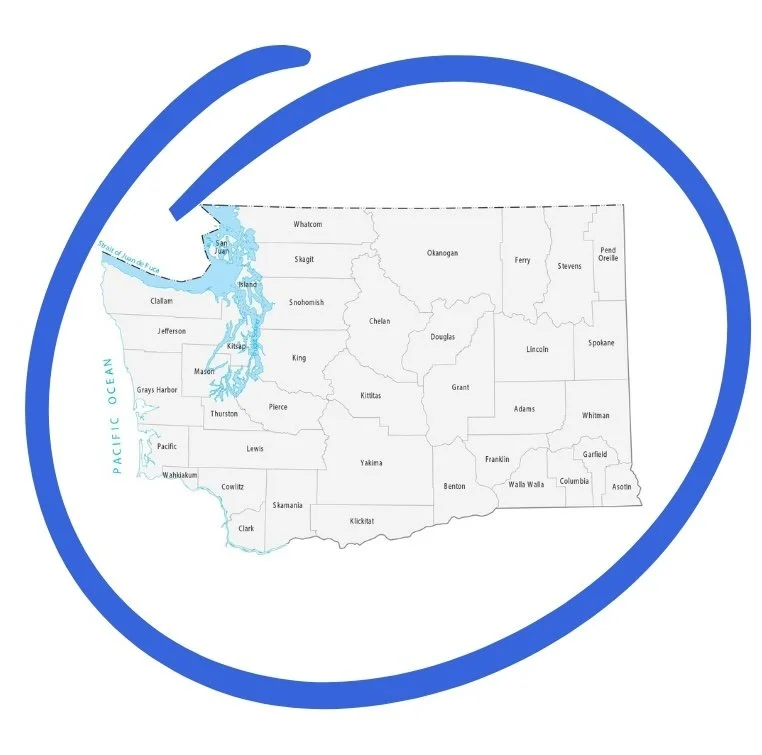
Let’s keep drawing that circle around the state—and widening it to include everyone.
Looking Ahead to Part III
In Part III, the final part of this series, we’ll address implementation: governance models, partner roles, and practical tools for educators, employers, and communities who want to plug into Washington’s maritime campus. We’ll explore what it takes to sustain this work overtime—and how Washington’s model can inform other sectors and other states.