
“Nothing Gets Done Without Welding” Post-Event Report 2026 Maritime Workforce Forum May 19, 2026
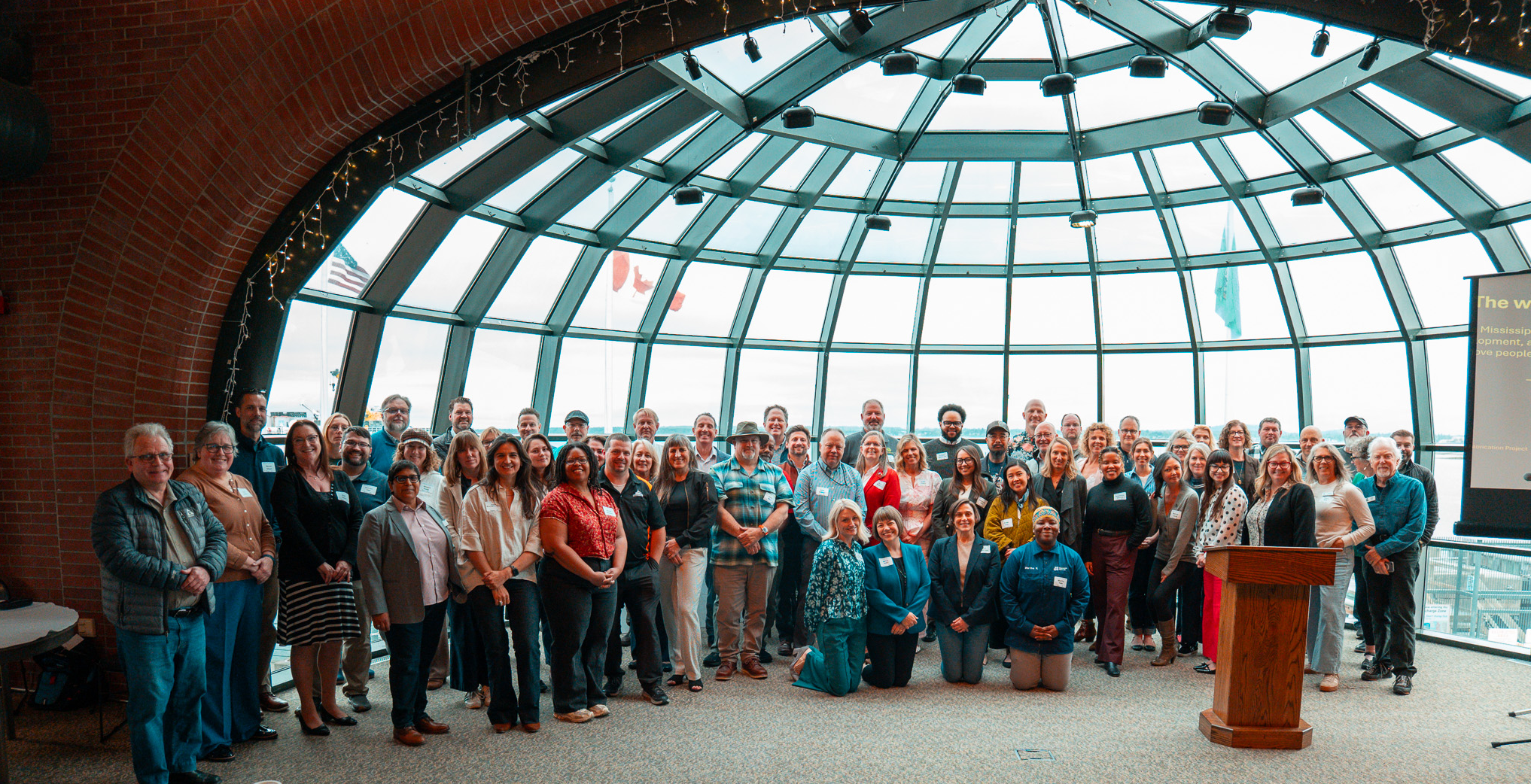
2026 Maritime Workforce Forum (5/19/26)
Prepared by: Ann Avary, Director, Center of Excellence for Marine Manufacturing & Technology
Overview
The 2026 Maritime Workforce Forum, convened at the Port of Bellingham, brought together leaders from industry, ports, education, labor, economic and workforce development, and government to address one of the most pressing constraints facing the maritime sector: skilled workforce capacity, particularly in welding and fabrication.
Designed as a working session rather than a traditional conference, the Forum emphasized real-time problem solving, shared insight, and actionable strategies to align workforce development efforts with industry demand.
Strategic Context: Aligning Workforce Development with the Maritime Industrial Base
The insights from the 2026 Maritime Workforce Forum reinforce a broader national imperative: workforce development is now central to rebuilding the U.S. Maritime Industrial Base (MIB).
At the federal level, the Maritime Action Plan positions workforce capacity as a critical lever for restoring shipbuilding competitiveness, strengthening supply chains, and ensuring national and economic security. The Plan identifies four core pillars, including rebuilding shipyard capacity, reforming workforce education and training, and protecting the Maritime Industrial Base, underscoring that industrial expansion cannot occur without parallel workforce investment.
This national strategy directly aligns with what was observed at the Forum:
Demand is immediate and spans vessel construction, repair, and modernization
Workforce shortages are already constraining production timelines
Infrastructure investments at ports and shipyards require a ready and scalable talent pipeline
Welding as the Critical Link Between Policy and Production
The Forum’s emphasis on welding as a foundational skill is further validated by national workforce data. According to the American Welding Society, the United States will need approximately 320,500 new welding professionals by 2029, driven by industry growth and a significant wave of retirements.
This data highlights a key reality:
Welding is not simply a workforce issue; it is a production and capacity issue.
Within the maritime sector, welding underpins:
Shipbuilding and vessel fabrication
Maintenance, repair, and overhaul (MRO)
Port and waterfront infrastructure development
As noted during the Forum by Steve Dibert, PSNS, “nothing gets done without welding,” a statement that directly reflects its role as the keystone trade within the maritime industrial base.
The Maritime Industrial Base: Workforce as the Limiting Factor
The Maritime Industrial Base encompasses the full ecosystem required to build and sustain vessels, including:
Shipyards and repair facilities
Suppliers and manufacturing systems
Skilled trades workforce
Federal analyses and industry stakeholders consistently emphasize that workforce availability is one of the primary constraints limiting the ability to scale shipbuilding and maritime production.
The Maritime Action Plan explicitly calls for:
Expanded maritime training and education pathways
Credentialing reforms
Increased support for workforce recruitment and retention
These priorities mirror the Forum’s conclusions that scaling the workforce will require:
Early awareness strategies
Expanded technical training capacity
Investment in instructor development
Stronger alignment between education systems and industry demand
Key Maritime Workforce Forum Themes and Insights
1. Infrastructure Investment Drives Workforce Capacity
In his keynote address, Port of Bellingham Commissioner Michael Shepard emphasized that infrastructure is foundational to workforce expansion.
Planned investments—including the reclamation of approximately 15 acres of marine trades land and installation of a 300–400-ton travel lift—reflect a long-term commitment to growing maritime industrial capacity
The message was clear: workforce strategies must be matched with physical infrastructure investment to achieve scale
2. Demand Extends Across New Build and Repair
Panel discussions reinforced that workforce demand spans the full lifecycle of maritime operations:
New vessel construction
Maintenance and repair
Refit and modernization work
In some cases, new builds are replacing older vessels due to cost efficiencies, reinforcing the need for a consistent and adaptable workforce pipeline.
3. Workforce Shortages Are Immediate and Impacting Production
Employers conveyed a consistent and urgent message:
Hiring demand is immediate and unmet
Workforce gaps are already limiting production capacity and timelines
This reinforces that the workforce challenge is not future-oriented - it is a present-day constraint on industry growth.
4. Welding is Essential, In-Demand, and Highly Competitive
Welding emerged as the central occupation underpinning maritime industry capacity:
Critical across shipbuilding, repair, and infrastructure
Resilient to automation and AI displacement
However, maritime employers are competing for talent with other industries, including:
Energy
Construction
Aerospace
Natural Resources
In response, employers are increasingly focused on:
Competitive compensation packages
Benefits and retirement offerings
Overall job quality and retention strategies
5. Awareness is the Primary Barrier to Entry
Across panels, the most consistently cited challenge was lack of awareness of maritime careers.
Panelists emphasized the need for earlier exposure, particularly at the middle school level
The concept of “awareness, awareness, awareness” emerged as a defining takeaway
Consensus: Workforce pipeline challenges begin long before postsecondary education.
6. Public Investment Plays a Critical Role
Federal programs were identified as essential tools for sustaining and expanding capacity, including:
Small Shipyard Grant Program
Port Infrastructure Development Program
These investments support:
Facility modernization
Equipment upgrades
Long-term industry competitiveness
7. Ports as Economic Engines and Conveners
The ports panel highlighted the multi-faceted role ports play in workforce development:
Economic drivers of regional growth
Conveners connecting industry, education, and workforce systems
Advocates for policy and investment
Stewards of long-term infrastructure
Ports are investing not only in immediate needs, but in legacy infrastructure that will shape the workforce landscape for decades.
8. Maritime Careers Offer Strong Opportunity - But Low Visibility
Panelists underscored the value of maritime careers:
Family-wage jobs
Career stability and advancement
High demand across sectors
However, the Forum reinforced a key disconnect:
These opportunities are not widely understood or visible to prospective students and workers
9. Education and Training Systems Must Expand and Align
There was broad agreement on the need to:
Expand technical training programs, particularly in welding
Strengthen alignment between education providers and industry demand
Accelerate dual credit and career-connected learning pathways
The emphasis was on speed, scale, and relevance—ensuring programs move at the pace of industry need.
10. Faculty Development is a Critical Constraint
A key takeaway from the welding-focused discussions was the importance of instructor capacity.
Need to support faculty across:
K-12 CTE programs
Community and technical colleges
Apprenticeship systems
Priority areas include:
Industry-aligned professional development
Safety and modern curriculum integration
Ongoing instructor support to maintain program quality and relevance
11. We’re on the right track
· Washington State has strong partnerships, innovative models, and growing momentum.
· The work now is to continue scaling coordinated solutions that meet both current and future industry demand.
Implications for Washington State and the MAC Model
Washington State is uniquely positioned within this national context. With its concentration of:
Shipyards and marine trades
Advanced manufacturing and aerospace overlap
Port-led infrastructure investment
Washington State represents a critical node in the national Maritime Industrial Base.
The MAC Welding & Fabrication Project directly addresses the structural challenge identified at both the Forum and federal levels:
Creating standardized, industry-aligned training pathways
Expanding access across regions and populations
Building faculty capacity and scalable programs
This work reflects a broader shift:
Workforce development is no longer a parallel effort - it is core infrastructure for industrial growth.
Cross-Cutting Conclusion
The Forum reinforced a clear and urgent conclusion:
Washington State has strong and sustained demand signals for maritime workforce development - but scaling the workforce will require coordinated investment across infrastructure, education systems, faculty capacity, and early career awareness.
While progress is underway, panelists emphasized that this work requires:
Continued momentum
Cross-sector collaboration
Long-term commitment
Next Steps and Opportunities
Based on Forum discussions, several priority opportunities emerged:
Expand middle and early high school career awareness efforts
Increase capacity in welding and fabrication training programs
Invest in faculty recruitment and professional development
Strengthen dual credit and pathway alignment statewide
Continue leveraging federal and state infrastructure funding opportunities
Bottom Line
The Forum affirmed that we’re on the right track, with strong alignment across industry, education, and public partners.
It also underscored a critical reality:
The pace of workforce development must accelerate to meet growing demand.
The convergence of Forum insights, national policy, and workforce data points to a single conclusion:
The ability to rebuild and scale the U.S. maritime industrial base will depend on how quickly and effectively we can expand the skilled trades workforce - especially in welding.
The opportunity and urgency are clear: align statewide efforts with national strategy to ensure that Washington’s workforce system is not only responsive but leading in building the talent pipeline required for maritime resurgence.