

Opinion: The Three Maritime Action Plan Provisions That Could Matter Most
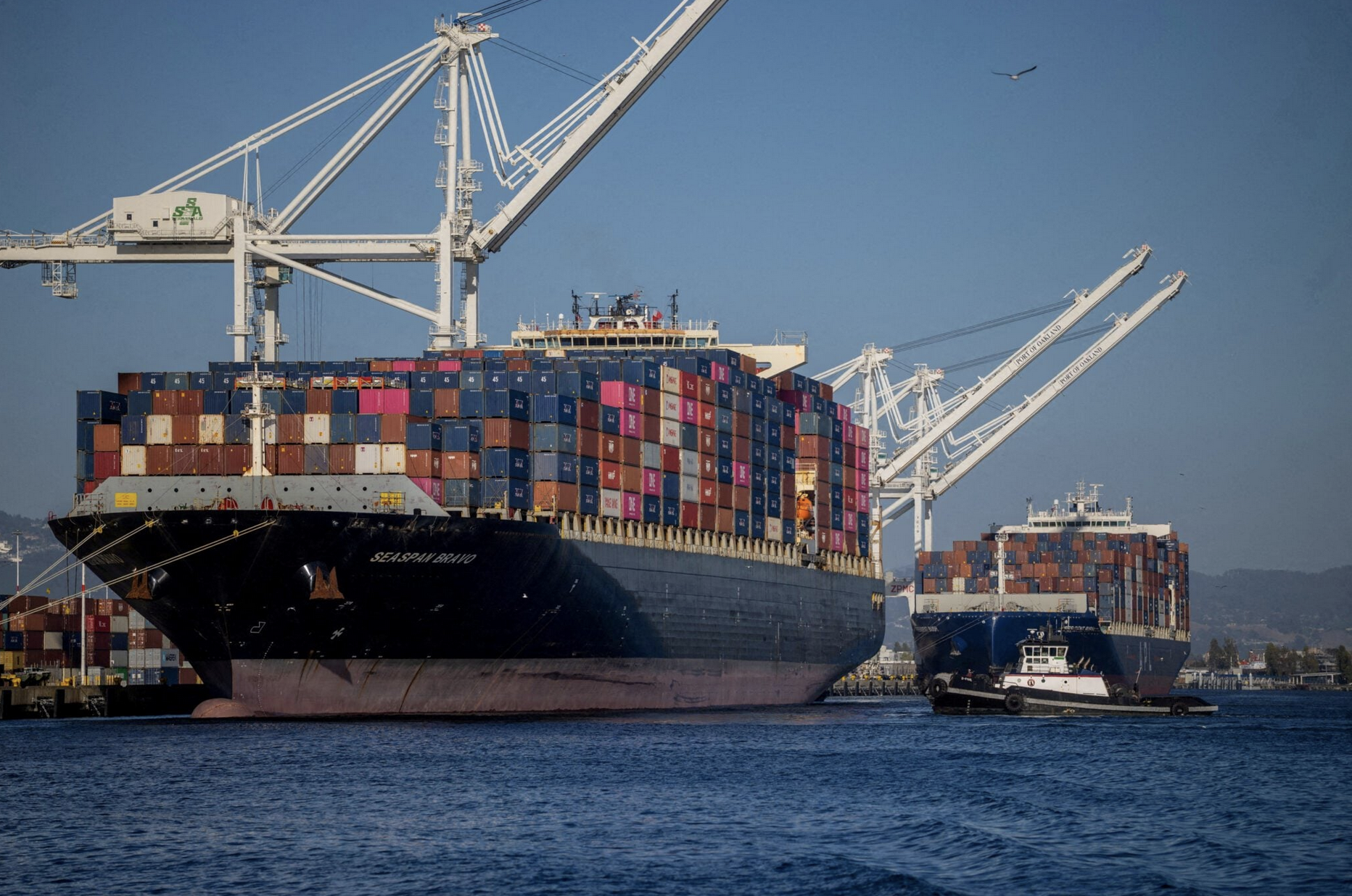
A cargo ship full of shipping containers is seen at the port of Oakland, California, U.S., August 4, 2025. REUTERS/Carlos Barria/File Photo
As Maritime Week put the spotlight squarely on Washington, D.C.’s maritime sector, the Maritime Action Plan (MAP) continued to attract attention for good reason. If you operate, finance, insure, build or charter ships, you already know the core issue: The U.S. can’t count on surge sealift, sustained logistics or real maritime resilience without a commercially viable U.S.-flag fleet and a stronger industrial base behind it. Importantly, the MAP’s long-term success hinges not just on government-impelled cargo (military sealift, food aid and preference cargoes) but on cultivating genuine commercial cargo – the private-sector shipping demand that keeps fleets active during peacetime and creates the economic foundation for rapid mobilization when strategic needs arise.
The MAP is a big package, but three ideas will drive a lot of the real-world impact: 1) strategic commercial fleet and cargo preference – because in this business, cargo is king, 2) a maritime trust fund to bring steady, dedicated funding, and 3) Maritime Prosperity Zones (MPZs) to focus incentives where projects can actually get built.
Go to this link to read the full article published by gCaptain https://gcaptain.com/opinion-the-three-maritime-action-plan-provisions-that-could-matter-most/